Sunday, 25 May 2014

The Low-down On Sweeteners - Baking With Less Sugar


Newest food mash-up:

I saw these recently online and had to put my spin on them! They are a great healthier alternative to the muffin/scone from the cafe you by for the on-the-go breakfast or snack. Bake these on a Sunday and have healthy snack/light breakfast option for the whole week.

The scuffin is a frankenpastry — part scone, part muffin and, like a doughnut, filled with jam —but despite its complex genetics, it is very easy to make. It is even fairly healthy, using whole grain/gluten free flours and flaxseeds, and keeping the ‘fat’ minimal. The spices can be varied (swap in nutmeg, ginger or allspice for the cinnamon or cardamom), and so can the jams.


TOTAL TIME
1 hour


INGREDIENTS
  • 1/4 cup coconut oil (solid)
  • 1 cup spelt/white flour
  • ¼ cup quick oats
  • ¼ cup buckwheat flour
  • ¼ cup almond flour
  • 1/4 flaxseed meal or wheat germ
  • 3 tablespoons light brown or raw sugar, plus extra for sprinkling (I used 1 Tblsp of brown sugar, 1 Tblsp of granulated stevia and 1 Tblsp of Erythritol*)
  • 1 1/2 teaspoons baking powder
  • 1 teaspoon cinnamon
  • 1 teaspoon ground cardamom
  • 1/2 teaspoon sea salt
  • 1 egg
  • 1/3 cup milk
  • 1/3 cup Greek yoghurt
  • 2-4 Tablespoons of fruit jam, conserves, preserves or fruit butter (I alternated between; lemon curd, rhubarb jam and apricot preserve)
PREPARATION
1. Heat oven to 180 degrees Celsius. Using an oil spray, coat the cups of a standard-size 6-cup muffin tin (12 small/mini).

2. In a mixing bowl, combine dry ingredients. Meanwhile, melt 4 tablespoons coconut oil, add to dry ingredients and mix with a fork until just combined.

3. In another bowl, whisk together egg, milk and cream. Add to dry ingredients and mix to combine (the dough will be quite sticky).

4. Reserving about a quarter of the dough for topping, scoop 2 tablespoons dough into each cup. Using the back of a spoon, press dough gently down into the cups. The dough will move up the sides, and there should be a shallow well in each dough cup. Don’t worry if the dough doesn’t come all the way up to the top; there should be about 1/2 inch of space between the top of the dough and the rim of the cup.

5. Spoon about 1 teaspoon jam into each well. Using your fingers, pinch remaining dough into small clumps and scatter evenly over the jam in each cup, making a bumpy topping or just scoop a tablespoon or so or the mix on top for a smoother topped scruffin. Sprinkle raw sugar over the tops.

6. Bake 20 to 25 minutes, or until browned. Let cool in the pan on a rack.

Makes: 6 (12 small) scuffins


HFG guide to sweeteners:


By Tracy Morris

With so many different sweeteners available, it can be difficult to know which one is best for your needs.

Non-nutritive sweeteners are intensely sweet, meaning only a very small amount is needed – so they are virtually kilojoule-free and have no impact on blood sugar levels. With the exception of stevia, most non-nutritive sweeteners are chemically produced.

Aspartame (eg. Equal, NutraSweet)

What is it? An artificial sweetener made by joining two amino acids – aspartic acid and phenylalanine.
Nutritional properties: Provides about the same amount of energy as table sugar, but because it is 160-220 times sweeter than sugar, only a tiny amount is needed, making the energy negligible.
Best use: Aspartame loses its sweetness at high temperatures so it’s not suitable for cooking. It is commonly used in cold food products such as diet soft drinks, cordial and yoghurt.
Take note: People with Phenylketonuria (PKU) – an inherited disorder that increases the levels of amino acid phenylalanine (a building block of proteins in the blood ) – are advised not to consume aspartame as it contains phenylalanine.

Acesulphame potassium or Ace-K (eg. Equal Spoon for Spoon, Sweet One®, Sunnett)

What is it? A synthetically produced potassium salt.
Nutritional properties: Ace-K is 200 times sweeter than sugar and does not provide any kilojoules as it is not broken down by the body.
Best use: Baking, because it is stable at high temperatures.
Take note: In high concentrations it has a slightly bitter aftertaste so it is often blended with other sweeteners to produce a more sugar-like taste.

Sugar alcohols or polyols (eg. sorbitol, xylitol, erythritol)*

What is it? These occur naturally in certain fruits or can be produced artificially from glucose.
Nutritional properties: Provides half the kilojoules of table sugar  but only a small amount is absorbed into the bloodstream.
Best use: Often used to replace sugar in chewing gum, polyols are not broken down by mouth bacteria so they don’t promote tooth decay.
Take note: If eaten in large quantities, they can have a laxative effect and cause diarrhoea, bloating and gas.

Stevia or steviol glycosides (eg. Equal Stevia, NuNaturals Nu Stevia™, Natvia)

What is it? A natural, non-nutritive sweetener extracted from the leaves of the stevia herb.
Nutritional properties: Stevia is 250-300 times sweeter than table sugar, with no impact on blood sugar levels. It has 11kJ per gram.
Best use: People who prefer a natural sweetener over a synthetic one but don’t want the kilojoules.
Take note: Some stevia extracts have a distinct aftertaste similar to liquorice.

Saccharin (eg. Sweet’N Low®, Necta Sweets, Sweet Twin)

What is it? A synthetically produced sweetener made by combining a number of chemicals.
Nutritional properties: Saccharin is 200-700 times sweeter than table sugar and provides no energy.
Best use: Enhances the strength of other sweeteners.
Take note: Not recommended for pregnant women or children under two years.

Sucralose (eg. Splenda®, Sugar Free Natura)

What is it? Sugar that is chemically processed to replace hydrogen and oxygen molecules with chlorine molecules.
Nutritional properties: Six hundred times sweeter than table sugar, with most of it passing through the body unchanged, providing no energy.
Best use: Since it is the most heat-stable non-nutritive sweetener, sucralose can easily be used to replace sugar (cup for cup) in cooking and baking.
Take note: Sucralose tastes very similar to sugar and has no bitter aftertaste, which is common with other non-nutritive sweeteners.


Top non-nutritive sweetener picks
  • Best for baking: Sucralose or stevia
  • Most natural: Stevia
  • Best for your teeth: Sugar alcohols


Interesting article I found this week: Do you know what's really 'in' your drink?
My newest app I hate to love (my bladder hates me): Water Your Body...
 50 Apps Tip Top Condition roundup: Water Your Body

My favourite inspirational quote lately: MIND POWER!!!!


Saturday, 19 April 2014

Why Your 'Diet' May Not Be Working

The 10 Daily Diet Mistakes You May Be Making:


1. Salad
The biggest pitfall with a salad is ruining a veggie-filled meal with hundreds of calories in dressing. Check the label, often-times the dressing with a salad at a restaurant has more calories than a chocolate bar. Order dressing on the side. You should aim to put no more than 60 calories of dressing on a salad.


Salad dressings are all over the nutritional map. Some, such as blue cheese, are hefty in sat fat (1.2g per tablespoon) and others, such as balsamic vinaigrette, provide a good dose of healthy fats (1g of monounsaturated and 1.3g of polyunsaturated, with 0.4g sat fat). When purchasing a bottled dressing, shift your focus away from total fat. The nutrition label’s number for total fat includes bad fats and good fats, so it is misleading. Instead, look at the specific types of fat listed under total fat; aim for more mono- and polyunsaturated fats, less saturated, and no trans. Oil and vinegar–based dressings are generally high in healthy fats. In addition to the good-for-you components of dressings, those fats add rich texture and flavour and also help you absorb the fat-soluble nutrients (vitamins A, D, E, and K) found in salad.

2. Smoothies

Blending fruit with frozen yoghurt sounds like a sure-fire healthy snack. But dieticians warn against too much of a good thing. You may think, it fruit and therefore it’s healthy. However, most smoothies especially those sold at places like New Zealand Natural, Pita Pit and Tank are 475ml to nearly a litre for a large and contain too many servings of carbohydrates. So keep it small, and try to add vegetables to your smoothies whenever possible.

3. Soy Milk
Both soy and almond milk are great options for those who are lactose intolerant. But many people regularly grab the vanilla or sweetened varieties of these drinks, ignoring the excess sugar and paying attention only to the healthy connotations of the word "soy" or "almond." If the sweetened versions are all you can tolerate, though, avoid the added sugar by mixing a teaspoon of vanilla flavouring into the unsweetened kind.

4. Granola/Toasted Muesli
Granola is a food that most people consider an uber-healthy breakfast choice. But granola can also be very high in sugar and low in fibre. When you look for granola/muesli, you need to read the label carefully. Not all granola is created equal. Make sure the cereal or granola you're choosing from the store shelf has a minimum of 4 or 5 g of fibre, less than 10 grams of sugar per serve and very low (<2g) saturated fat.

5. Muffins
You're rushing to get to work on time and dash into the nearest cafe to pick up a quick breakfast. In the name of health, your eyes are drawn to those bran muffins on display beside the donuts. But don't let the word "bran" or "yogurt" trick you when it comes to muffins. Think of them more in the donut category. Bran muffins often contain extra fat, necessary to hold the bran together. And the fat-free versions usually contain extra sugar to compensate for the reduced in mouth-feel and flavour. But today’s giant bakery muffins contain from 340 to 630 calories each, without any butter or other spread.

Most bakery muffins contain from 11 to 27 grams of total fat. Of that total, 2 to 8 grams are saturated fat. Although the trans-fat content of muffins is extremely low in most cases, the total saturated fat plus trans fat of giant bakery muffins is only slightly less than doughnuts.
Reduced-fat muffins are usually a better option. They have only 2 to 5 grams of total fat, and only 0 to 2 grams of that is saturated fat. And unlike other reduced-fat products, the sugar content in these muffins is generally the same as in regular muffins. Calories remain in the 300 to 400 range.

Pick Your Breakfast:


Spinach and Parmesan Omelette – 300 calories
VS.
Muffin Break - Apple and Raisin Muffin – 574 calories (21g fat and 49g sugar!)


Parmesan omelette recipe:
In a medium skillet coated with non-stick cooking spray, sauté 1 cup chopped spinach and 1 tablespoon chopped spring onions for 1 minute. Beat 2 eggs with a dash chilli sauce; add to skillet. Cook until egg is cooked through, about 2 minutes. Flip and add 2 teaspoons grated Parmesan; cook 15 to 30 seconds. Serve with 1 slice toasted oat bread and 1/2 cup grapes.

6. Sushi
This one might be surprising since the tuna, salmon and other fish commonly found in sushi is about as lean as it gets. Yet when you factor in the cream cheese or the mayonnaise in most spicy tuna rolls the calorie count sky-rockets. Portion size matters, too; stick to three rolls or less, and choose brown rice when possible.

Chicken Rice Ball: 489 calories (Want it tempura/crispy make it: 531 calories!) VS. One roll (8 pieces) generic chicken sushi (teriyaki): 376 calories

7. Turkey/Chicken Burgers
When a burger craving hits, the calorie-conscious person often turns to a turkey/chicken burger as the second-best option. But be careful, if you have a turkey/chicken burger made with dark meat and skin, it can be higher in calories than a sirloin burger. At the grocery store: Check the label and pick a lean meat with less than 10 g of fat per serving.

You have a craving for fast food? Grilled chicken beats beef burger right? Wrong.

Result: Sodium overload, and not necessarily much in the way of calorie savings, either

Sodium can soar in a chicken sandwich. The chicken breast may have been injected with a salty brine solution to help the meat stay moist. At Burger King, the Tendergrill Chicken sandwich has 1,100mg sodium, and 75% of that comes from the chicken itself. (A Whopper Jr. burger has half the sodium, little of it from the beef, and 130 fewer calories.)

Lean chicken sometimes picks up salty toppings, like the bacon and cheese on the McDonald’s Premium Grilled Chicken: 1,410mg of sodium, 18% more than a Quarter Pounder with Cheese—and is not lower in calories.

What to do: You have a 2,300mg-per-day sodium budget. Take a minute to scan the restaurant’s nutrition data—online, in-store, or from a smart phone.

8. Frozen Meals
There's a whole section of frozen meal options that are quick and easy to make and boast low calorie counts. Yet many are also packed with sodium. Frozen and prepared foods can often have a day's worth of sodium, which is roughly 2,300 mg per day.

9. Bagels

Bagels can have fewer calories — if you are careful about portion size. The mini-bagels have about 72 calories. But average deli bagels contain 300 to 380 calories each — without any cream cheese. Beware of “reduced-carbohydrate” bagels. In at least one such product, the amount of fat is increased, so there are as many calories as in a regular bagel.
Bagels are another good choice for limiting total and saturated fat. Even those big deli bagels usually have no more than 2 grams of total fat and only a trace of saturated fat. Bagels with cheese or chocolate, however, can hold as much saturated fat as a doughnut.

Toppings is where things go wrong:
Of course, the fat content of bagels is heavily influenced by the topping. About two tablespoons of regular cream cheese add around 100 calories and 6 grams of saturated fat. This will make your bagel the saturated plus trans fat equivalent of a doughnut and the calorie equivalent of one or two doughnuts. Light cream cheese is a healthier topping with 90 calories and 5 grams of saturated fat, but peanut butter is even healthier.
Although two tablespoons of peanut butter has 185 calories, the fat content has a better make up with only 3 grams of saturated fat and just a trace of trans fat. Because of the protein, a peanut butter bagel should satisfy your hunger for a long time, too, while doughnuts probably won’t.
If you choose carefully, bagels offer another advantage: nutritious whole grains. But you will need to look for whole-grain bagels closely. Bagels with a “whole wheat” label come from whole grains, but “nine-grain” and “multi-grain” bagels may not. To know for sure, look at the list of ingredients. A whole grain should be the first item. If you see just the word “wheat,” the product is mostly made with refined white flour.


10. Portion Control

Do you ‘free-hand pour’ at the breakfast table?

I noticed my flat-mate looking at me funny as I portioned out the recommended serving size for my morning cereal and smiled as she poured her cereal in a bowl free-hand with abandon…she thought I was crazy, I knew better.

Result: You likely eat enough for 1.4 people.

When a study asked 100 people to show us their typical cereal pour, only 1 in 10 poured close to the recommended portions. For flake cereals, the average pour was 40% more than the 1-cup serving size. A full cup of skim milk in the bowl means you’ve added 40 more calories over the label standard.

What to do: Read labels, then practice with a measuring cup, just to get an idea of the recommended serving. If you change cereals, start over.


My number one top tip:


Look at The Nutrition Information!
The key to knowing whether the foods you're buying are as nutritious as they seem is being able to read the nutrition labels. Some tips from the experts can help you navigate the information on a food package:

• Be mindful of portion size: people often miss the serving size. The packaging can make a food or drink look like a single serving, when it's actually two or more.

• Look for foods that are trans fat-free: Trans fat is harmful for your heart. While you're at it, though, also scan the label for partially hydrogenated oils, another ingredient you should avoid.

• Don't be seduced by misleading words: "Organic" doesn't necessarily mean a food is low in calories, and "fat-free" can be a mask for loads of added sugars to hide behind. Instead of assuming these marketing catch-phrases indicate a healthy food, check out the label and be mindful of the order in which the ingredients are itemized. If an unhealthy one like sugar is at or near the beginning of the list, steer clear of the food.


Information thanks to: www.livestrong.com

Wednesday, 26 March 2014

Spice Up Your Life With a Great Root!

Almost all of us know that ginger is great at reducing motion sickness however, ginger has been used medicinally across several cultures to treat more than just nausea. Here are some other ways it can help your health:

It can keep you young

A recent study in Thailand of women aged 50 to 60 showed that after six months of taking ginger, their memory and cognitive function improved.

"There is growing evidence that ginger has a neuroprotective function," naturopath Kathleen McFarlane says.

"That means there could be benefits for conditions such as Alzheimer's."

Add 100 grams of grated ginger to stir-fries or salads to up your brain power.

It's a natural painkiller

Thanks to its well documented anti-inflammatory properties, ginger can aid sore joints and muscles by acting as an analgaesic. There is even new evidence that suggests it can help ease arthritis symptoms.

"For severe muscle pain, you're going to need a bigger dose of ginger than a bit grated in food to have an effect," naturopath Pam Stone says.

See a naturopath who can prescribe an appropriate dose.

For something less severe, such as period pain, a cup of ginger tea could help to ease symptoms."

It fights allergies

Itchy eyes, running nose and a scratchy throat are all common signs of allergies.

But if you don't want to pop a pill, ginger could come to your rescue. "Ginger stimulates mucus so could help ease a sore throat," McFarlane says.
Grate some into hot water and add lemon and honey.

It calms you

"Ginger has a warming, calming effect on the organs, specifically the intestinal tract," McFarlane says. "Those suffering from irritable bowel syndrome (IBS) symptoms - bloating, gas and discomfort - could find they ease after adding ginger to their diet. Drinking ginger steeped in hot water every morning can also promote better bowel function and put a stop to butterflies in the stomach related to IBS."

It can keep you trim

Research shows ginger helps improve blood-sugar levels and may help to combat diabetes.

As well as potentially staving off the onset of diabetes in someone who is predisposed to the condition or showing signs of insulin resistance, it can also help prevent abdominal weight gain, the kind that puts pressure on the heart. This organ also gets some important benefits from ginger.

"The blood-thinning action of ginger helps prevent 'bad' LDL cholesterol hardening into plaque, which causes heart disease," McFarlane says. "See a naturopath to ensure you get the right dosage and check with your GP so it doesn't interfere with medication you're already on."

Source/ author: Kerry McCarthy for http://www.bodyandsoul.com.au/

Add More Ginger to Your Life: (Anna tested and approved recipes)


Low Fat Ginger Cake: Dairy and Egg Free!


Ingredients

  • 1 3/4 cups Ginger Ale/Beer or water
  • 1/2 cup packed brown sugar
  • 1/2 cup raisins/sultanas
  • 2 teaspoons ground cinnamon
  • 1 teaspoon ginger
  • 3/4 teaspoon ground nutmeg
  • 1/2 teaspoon salt
  • 1/4 teaspoon ground cloves
  • 2 cups all-purpose flour - I used a blend of 1 cup spelt and 1 cup high grade white flour
  • 1 teaspoon baking soda
  • 1 teaspoon baking powder
  • 1/4 cup blackstrap molasses
  • 2 tablespoons extra virgin olive oil (for fat free cake use non-dairy milk or water)

Icing:

  • 60g coconut oil
  • 2 cups icing/powdered sugar 
  • 1 cap full of lemon essence/extract (optional)
  • One lemon's worth of zest and juice
  • Approx 1/4 Chopped nuts and crystallized ginger for decoration.

    Instructions

  1. In a large saucepan, mix together the water/ginger ale (alcoholic ginger beer), sugar, raisins, cinnamon, ginger, nutmeg, salt, and cloves. Bring to a boil and boil for 2 minutes. Remove from stove and place in the refrigerator (or freezer for quicker results) to cool completely.
  2. Meanwhile, mix together the flour, soda, and baking powder. Add to the cooled raisin mixture. Mix in the molasses and milk. Pour into a 9 x 9-inch lightly greased pan. Bake at 170 degrees C (fan-forced) for 35 minutes or until a toothpick inserted into the centre comes out clean. Remove and allow to cool completely before serving.
  3. Use electric hand beater to cream icing ingredients. Once the mixture is creamy and completely combined, spread over cooled cake.
  4. Sprinkle edges with chopped nuts (I like walnuts and almonds) and crystallized ginger.

Smoothies:

Kale-Ginger Detox Smoothie from @Oh My Veggies (sub blackberries for blueberries, flax for chia)

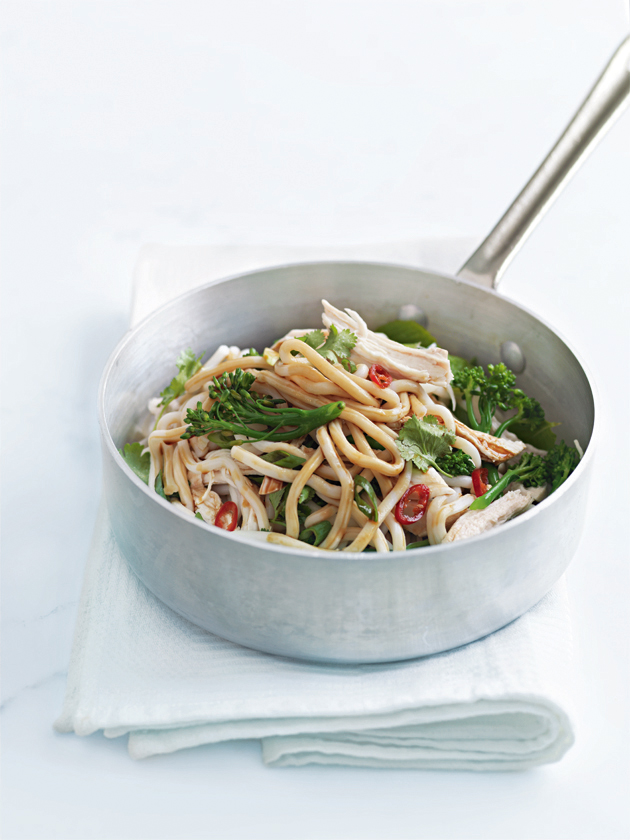
ginger-poached chicken noodles


http://menumusings.blogspot.com/


Cinnamon-Glazed-Gingerbread-Cupcakes


(I added  chopped macadamia in the base and diced dried apricots to the top) These got rave reviews at work!
No bake pisatchio ginger crunch